We get it, the balance is real in sport. The reality is self-coached triathletes finish triathlons and endurance events all the time. But there’s a reason coached athletes improve faster, race smarter, and stick with the sport longer. Here’s the honest breakdown.
What does self coaching look like?
- Self-coached training works — especially for sprint and Olympic distance, especially for athletes with strong athletic backgrounds
- The internet is full of free and paid plans (TrainingPeaks, Triathlete.com, etc.) and for many people that’s enough to get across a finish line
- Self-training offers flexibility, lower cost, and total autonomy over your schedule
- Many people start self-coached and that’s completely appropriate for a first sprint tri
If your only goal is to finish a sprint triathlon and you’re reasonably fit, you probably don’t need a coach. Say this directly. It builds trust for everything that follows.
But most athletes who start self-coaching eventually hit one of a handful of ceilings — and that’s where the conversation gets interesting.
Where self-coached athletes get stuck
Training volume goes up but performance doesn’t. The athlete is working harder but not smarter. Without periodization, proper recovery weeks, and progressive overload calibrated to their body, effort stops translating to improvement. What we see: athletes doing the same workouts week after week, wondering why they’re not getting faster. We also see that they might not be an objectie voice over their own training. We all want to do more but sometimes that is not the right answer.
If you have a minute and want to learn more about this, check out Coach Jess podcast here
Self-coached athletes — especially those coming from running or cycling — often stack disciplines on top of each other without accounting for cumulative load. The result is overuse injuries: IT band, plantar fasciitis, shoulder issues from poor swim mechanics. What we see: athletes who trained hard all spring, got hurt in June, and missed their August race.
Most self-coached athletes have a strong discipline and a weak one. They over-train the strength and under-train the weakness — or they train the weakness wrong (classic example: a runner who “does swim laps” but never gets technique feedback, builds endurance with bad form, and never improves). What we see: athletes who are fast runners and slow swimmers after two full seasons. We know the favorite sport is the one that you want to do the most, but keeping training balanced can help you become a better athlete
Self-coached athletes make decisions in isolation — should I race this weekend or rest? Is this fatigue normal or a sign I’m overtrained? Am I ready for a 70.3? Without a coach, every decision is a guess. The anxiety costs energy that should go into racing. What we see: athletes who undertrain because they’re afraid of overdoing it, or who burn out because they had no one to pull them back. We see athletes who are not sure if they did enough or too much.
Coaching doesn’t just add workouts to your week. It removes all four of these ceilings — and replaces guessing with a plan built specifically for you.
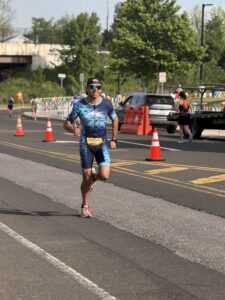
Generic plans are built for an imaginary athlete. Coached plans are built around your life — your work schedule, your injury history, your race date, your current fitness. When work gets crazy in week 4, the plan adjusts. When you have a great month and your fitness jumps, the plan evolves. A static training plan or chat gpt does not take into account how you feel.
Our coaches are constantly looking at your data and tweaking the plan. We are looking at the objective data on whether the plan is working. Not guessing — measuring. We are also communicating on how the training is impacting your life and how you are feeling.
Swim mechanics, bike position, run form — these are best fixed early. Coached athletes get eyes on their form. Self-coached athletes often don’t know they have a problem until they’re injured or racing slowly despite big training volume.
A coach helps you build a pacing plan, a nutrition strategy, and a race-day routine. Self-coached athletes often have the fitness to race well but execute poorly — going out too fast on the bike, cramping because of poor fueling, or leaving minutes in the transition area.
Coached athletes show up. Not because they’re more motivated, but because someone else knows what they’re supposed to do today. That structure is worth something real, especially for busy athletes balancing work and family.
You probably don’t need a coach if:
- Your only goal is to finish a sprint triathlon and you have a solid athletic background
- You’re testing the sport and not yet ready to commit to a race goal beyond “just try it”
- Budget is genuinely a barrier right now (and note: group programs and swim-only programs are lower-cost entry points)
You’re likely ready for coaching if:
- You’ve been training for 6+ months and your performance has plateaued
- You’ve had a recurring injury you can’t seem to shake
- You’ve signed up for your first 70.3 or full Ironman and the training feels overwhelming
- You’re doing the work but you’re not sure if you’re doing the right work
- You want the race experience to be meaningful, not just survivable
- You want to belong to a community, not just finish a race
The real question isn’t “do I need a coach.” It’s: “What do I want from this sport — and what’s the fastest, safest, most rewarding way to get there?”