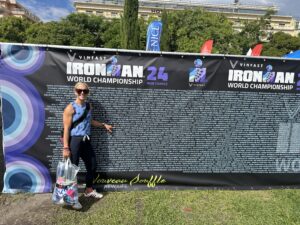
Turning 40, 50, or 60 doesn’t mean backing off, it means training smarter. Masters athletes (generally defined as 35+ in most sports) can still hit personal bests and compete at a high level, but the body’s rules shift. By adopting smarter training strategies and recovery modalities, masters athletes can enjoy endurance sports well into the later stages of their lives (the oldest female and male IM finishers were 82 and 85 respectively)! Here’s what the research says about the three areas that matter most: training structure, recovery, and fueling.
Training: Same Stimulus, Different Structure
The biggest misconception is that masters athletes need to train less. While that may be true in some cases, what actually changes is how the training is organized, not necessarily the volume. Perhaps one of the most important aspects to adjust is adding strength training to your routine. Muscle mass and power decline with age, no matter if you are an elite athlete or a weekend warrior. Resistance training is the single best tool for slowing muscle loss, since it continues regardless of how much cardio you do. In addition, research following masters athletes over a 10-year period found that consistent strength and sprint work counteracted age-related bone loss that would otherwise occur. A full-body strength program with at least two sessions per week is all that is needed to maintain muscle mass during your training.
Another aspect to consider is the proportion of low to high intensity workouts. Many masters athletes have spent years accumulating steady, moderate-intensity mileage. Because recovery windows are longer at this age, that “gray zone” training becomes harder to bounce back from without much fitness payoff. A polarized approach — mostly easy volume, with a small number of genuinely hard, high-intensity sessions — makes better use of limited recovery capacity than constant moderate effort. Also, staying out of the gray zone will improve speed; truly easy days will allow for more effort on hard days.
Lastly, the frequency and volume of recovery weeks will look different. Recovery microcycles that might reduce intensity by 5% for a 25-year-old often need a 10-15% reduction for a masters athlete. There also may be only two weeks of higher volume in between recovery weeks instead of three weeks of volume building. Sleep habits and stressors from both life situations and at work also affect recovery capacity more visibly with age, so the plan should flex based on your life phase at any given point in training rather than following a rigid template.

Recovery: It’s Not Just “Getting Older”
The recovery story for masters athletes is more nuanced than “everything takes longer.” Studies comparing masters and younger athletes found comparable recovery after non-damaging efforts — long steady rides, high-volume swimming — where fatigue is mostly about fuel depletion, not tissue damage. However, after exercise that damages muscle fibers, like hard running, eccentric-heavy strength work, or downhill efforts, masters athletes take measurably longer to recover. Some studies found incomplete strength recovery even 240 hours (10 days) after a damaging workout, which tends to open up starting in the 40s. If a masters athlete needs 72+ hours (and sometimes longer) to recover from a muscle-damaging session, stacking hard running days back-to-back invites an overuse injury or non-adaptation. Spacing out damaging sessions and using aerobic work to fill the gaps lets the hard stimulus land without digging a hole.
But when it comes to recovery after training, sleep is still the most powerful lever available. No supplement, modality, or recovery gadget outperforms consistent sleep for repair and adaptation. Having proper sleep hygiene (dark cool room, turning off screens way before bedtime, avoiding caffeine and alcohol in the evening, etc.) will help your body wind down to have a more restful night sleep, which improves repair mechanisms for both your muscles and brain.
Fueling: Protein Becomes More Important, Not Less
Nutrition science on masters athletes has shifted in recent years and the headline finding is reassuring: well-trained masters athletes are not simply “younger athletes with worse metabolism.” Trained masters athletes don’t show the same anabolic resistance to protein that is sometimes seen in sedentary older adults. In other words, staying trained appears to protect the body’s ability to use protein effectively. That said, a few practical points matter:
-Protein needs may run slightly higher for masters athletes than the general athletic recommendations, particularly to support muscle repair after damaging sessions. A useful target after a hard workout is roughly 0.3–0.4 g of protein per kilogram of bodyweight, with total daily intake skewed toward the higher end of standard athlete ranges (generally 1.6–2.2 g/kg/day, adjusted for training load).
-Timing and distribution matter as much as the daily total. Spreading protein across 3-4 meals, including a serving before sleep, supports overnight muscle repair better than front- or back-loading it into one or two meals. Whey protein’s leucine content makes it a convenient option post-training, though whole-food protein sources work just as well when the total intake is adequate.
-Muscle-damaging sessions take longer to recover from and fueling around those specific workouts deserves more attention than fueling around steady aerobic days. A damaging run or heavy lift session is where extra protein and adequate carbohydrate replenishment will do the most work.

The Bottom Line
Masters athletes aren’t fragile versions of their younger selves; they’re a distinct training population with real physiological differences that gain rewards with a different approach. Strength work should be treated as essential rather than supplemental, a training structure that respects longer recovery windows around damaging efforts, and a fueling strategy that leans slightly more on protein with more precise timing. Athletes who adjust for these differences, rather than training as if the calendar hasn’t moved, tend to be the ones still setting PRs well into their 50s, 60s, and beyond.