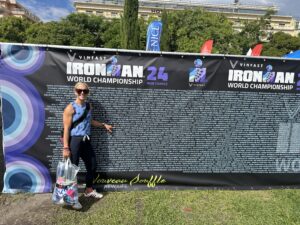
As temperatures rise, so does the cost of every workout. What felt manageable in cool weather can suddenly feel like a grind, even at lower intensities. Pace drops, heart rate climbs, and motivation can take a hit.
But here’s the truth: heat doesn’t make you less fit—it just changes the rules. Athletes who understand how to train and fuel in the heat don’t just survive summer training—they use it to their advantage. When the temperature ramps quickly in the Spring, athletes need to adjust, since they are not heat acclimated.

When you train in hot conditions, your body has an added job: cooling itself. Blood is redirected to the skin to dissipate heat, which means less is available for working muscles. The result?
- Higher heart rate at the same pace
- Increased perceived effort
- Faster dehydration
- Greater carbohydrate use
Ignoring these shifts is where most athletes go wrong. They try to force the same paces they held in cooler conditions, turning productive workouts into overly stressful ones.
Adjust Your Expectations First
Before changing your fueling or hydration, you need to adjust your mindset. Over time, you can adapt to the heat and conditions but in the first few days of hotter weather you need to think about the cost of the effort.
Pace is no longer the priority—effort is.
That means:
- Running by heart rate or perceived effort instead of pace
- Accepting slower splits without labeling the workout a failure
- Understanding that heat adaptation takes time (typically 10–14 days)
If you don’t make this shift, everything else—fueling, hydration, recovery—becomes harder to manage.
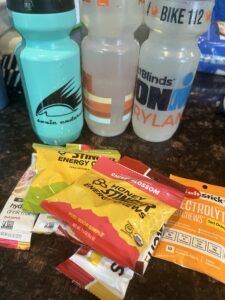
Hydration: It Starts Before the Workout
Hydration isn’t something you fix mid-session. If you start dehydrated, you’re already behind.
Daily hydration basics:
- Aim for pale yellow urine as a general marker
- Include electrolytes, especially if you sweat heavily, you should definitely know your sweat rate heading into a hotter race.
- Don’t rely on thirst alone—it lags behind actual needs
Pre-training:
- Drink 16–24 oz (500–700 ml) of fluid 1–2 hours before training
- Add sodium (300–600 mg) if conditions are especially hot or humid
Fueling in the Heat: Carbs Still Matter (More Than You Think)
One of the biggest mistakes athletes make is underfueling in the heat because they don’t feel as hungry.
Here’s the problem: your body is actually relying more on carbohydrates in hot conditions.
That means:
- Glycogen depletion happens faster
- Energy crashes come sooner
- Perceived effort skyrockets if fueling is inadequate
Simple approach:
- For sessions under 60 minutes: water + electrolytes may be enough, if you have more than one workout per day then you need to fuel them both.
- For 60–90 minutes: 30–60g carbs per hour
- For 90+ minutes: 60–90g carbs per hour
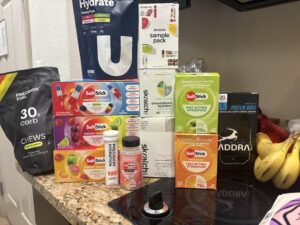
There are so many different products for fueling – you need to figure out what works for you. Use your training sessions to practice fueling, especially if it is hot out.
Electrolytes: The Missing Piece
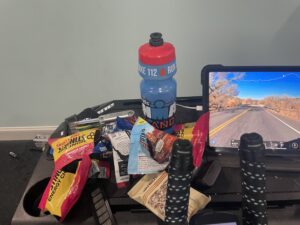
Water alone isn’t enough—especially for salty sweaters.
Sodium helps:
- Maintain fluid balance
- Prevent cramping
- Support nerve and muscle function
If you finish workouts with salt stains on your clothes or experience frequent cramping, you likely need more sodium and potentially more potassium.
Signs you’re under-replacing electrolytes:
- Headaches during or after training
- Dizziness or lightheadedness
- Muscle cramps
- Declining performance despite adequate effort
Cooling Strategies That Actually Work
Managing heat isn’t just about what you drink—it’s also about how you manage body temperature.
Before training:
- Start early or go later in the evening
- Stay in shaded areas when possible
- Pre-cool with cold fluids or even ice slurries
During training:
- Pour water over your head or body
- Wear light-colored, breathable clothing
- Use aid stations strategically in longer sessions
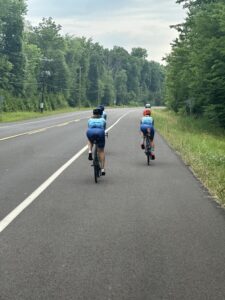
After training:
- Rehydrate with fluids + sodium
- Don’t skip post-workout fueling (carbs + protein)
- Use cold showers or ice packs if needed
Heat Acclimation: Your Hidden Advantage
The body adapts to heat surprisingly well—if you give it time.
After consistent exposure, you’ll notice:
- Lower heart rate at the same effort
- Improved sweat response (earlier and more efficient)
- Better overall tolerance
How to acclimate:
- Start with shorter sessions in the heat, if you are indoors layer up and dont run a fan.
- Gradually increase duration and intensity
- Stay consistent (sporadic exposure won’t drive adaptation)
Most athletes start to feel improvements within 7–10 days, with full adaptation closer to two weeks.
Final Thought: Respect the Stress, Reap the Reward
Heat adds stress—but not all stress is bad. Managed correctly, it can improve your efficiency, mental resilience, and race-day readiness.
The athletes who perform best in hot conditions aren’t the toughest—they’re the most prepared.

So instead of fighting the heat, learn to work with it.