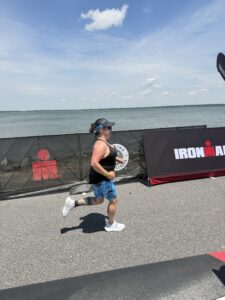
The Olympics give us a powerful reminder that performance and joy are not opposites — they often fuel each other.
As the world turns its attention to the 2026 Winter Olympics in Milan–Cortina, we’re once again reminded why sport matters. Yes, the Olympics showcase the highest level of preparation, precision, and performance. Yes, medals are earned by fractions of seconds. But beyond the podium, what stands out every Olympic cycle is something less measurable:
Joy.
If you followed the Womens Olympic figure skating, you saw that Alysa Liu found her joy on the ice. After leaving sport at the age of 16, she came back with a different approach.
Because while the Olympics represent peak performance, they also reveal a truth we sometimes forget in our own training:
The athletes who race with joy often unlock their best performances.

Joy Creates Longevity
Longevity requires more than physical durability — it requires emotional sustainability.
Athletes who endure over time often talk about rediscovering joy after burnout, injury, or disappointment.
They:
-
Reconnect to why they started.
-
Embrace process over outcome.
-
Celebrate small daily wins.
-
Protect play within performance.
For endurance athletes training for marathons, triathlons, ultras, or gravel races, this lesson is critical.
If your motivation is tied only to PRs or podiums, it’s fragile.
If your motivation includes joy — community, movement, sunrise miles, shared suffering — it’s durable.
Joy is not just race-day emotion. It’s a training strategy.

Joy Strengthens Resilience
Olympic competition rarely unfolds perfectly. Look at Ilia Malinin, he struggled on his free skate and then came back to nail the exhibition gala.
There are false starts.
Equipment failures.
Unexpected surges from competitors.
Conditions that change mid-event.
The athletes who adapt quickly often display emotional flexibility. You see it in their faces — a reset, a nod, a refocus.
Joy doesn’t mean naivety. It means perspective.
When an athlete’s identity isn’t solely tied to outcome, they recover faster from setbacks.
In endurance racing, adversity is guaranteed:
-
A missed nutrition bottle
-
A dropped chain
-
A cramp at mile 20
-
A pacing error early on
Athletes who race with joy have emotional buffer. They adjust instead of unravel.

Joy Is Contagious — and Culture Matters
Just take a moment to watch the USA Mens and Womens Hockey teams. Even in individual sports, no athlete arrives alone. Behind every competitor is a support system — coaches, teammates, family. Stunning wins for both teams to capture the gold in overtime.
They epitomize how working together and creating a supportive culture elevates all.
When training environments prioritize:
-
Celebration of effort
-
Encouragement over criticism
-
Gratitude alongside ambition
Athletes thrive.
In endurance communities, this is especially important. Many athletes train in isolation. Joy must be intentionally cultivated — in group training sessions, team races and events.
When one athlete competes with visible joy, it lifts others. The Olympic stage amplifies that truth.